
Cross-border freight between Canada and the U.S. is one of the busiest trade flows in the world — and one of the easiest to get stuck at the line. The freight itself is rarely the problem; the paperwork and planning are. Here’s what every Canada–US shipment needs to keep moving.
What every cross-border shipment needs
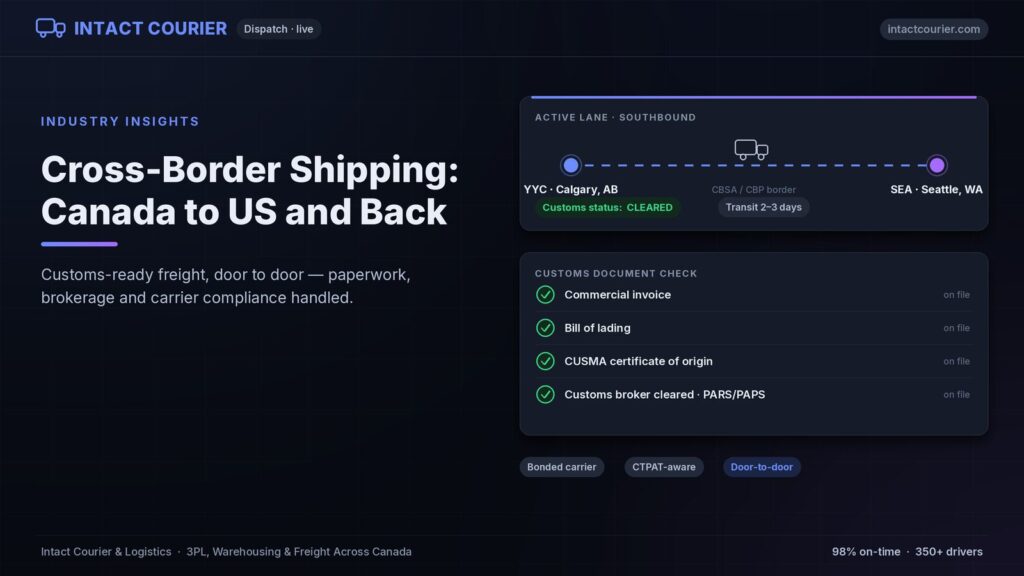
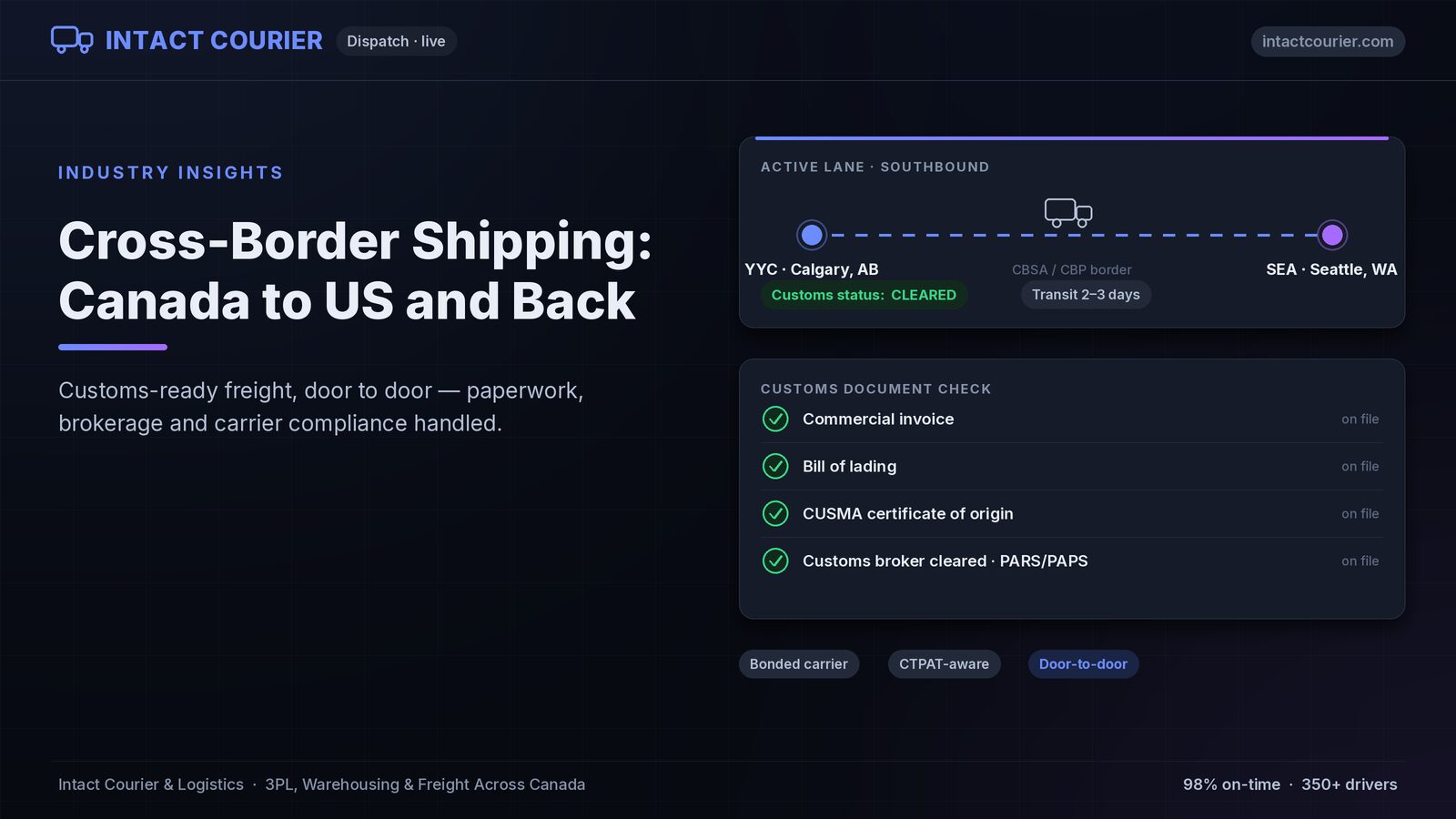
Before a truck rolls, line up the essentials: a commercial invoice with accurate HS codes, a customs broker to handle clearance, agreed duties, taxes and Incoterms so everyone knows who pays what, the bill of lading and carrier documents, a certificate of origin where CUSMA/USMCA preferential treatment applies, and a bonded carrier for any in-transit movement. The graphic above is the short checklist.
The mistakes that hold freight at the border
Most border delays trace to a handful of avoidable errors: wrong or vague HS classification, no broker arranged in advance, Incoterms left unclear so a shipment stalls over who owes duty, or a missing certificate of origin that turns a duty-free move into a taxed one. Each one means the freight sits — and sitting freight costs storage, missed appointments and unhappy customers.
How to keep cross-border freight moving
Plan the paperwork before the pickup, not at the crossing. Use a partner who coordinates the broker, the documents and the carrier as one process rather than handing you three phone numbers. When customs clearance and transport are managed together, the border becomes a checkpoint you pass — not a place your freight waits.
The customs process, step by step
A compliant cross-border shipment follows the same arc every time: classify the goods (HS code), value them accurately, prepare the commercial invoice and origin certification, transmit everything to the customs broker, pre-clear under PARS (into Canada) or PAPS (into the US), cross, and keep the records — CBSA and CBP both expect years of retention. Shippers who systematize these steps stop experiencing the border as a lottery.
CUSMA, duties and who pays what
Most goods that originate in North America cross duty-free under CUSMA — but only if you claim it with a valid certification of origin. Without it, duty applies at the standard rate and nobody refunds your silence automatically. Separately, decide Incoterms deliberately: who pays freight, who is importer of record, who eats duty and brokerage. DDP (seller pays everything) is a customer-experience win for e-commerce; DAP shifts costs to the buyer and surprises them at the door.
Carrier, broker, or both: who does what
The carrier moves the freight and applies the PARS/PAPS barcode; the broker files the customs entry and answers CBSA/CBP; you remain responsible for the truth of the paperwork. The smoothest setups pair a bonded, border-experienced carrier with a broker who receives documents at pickup time — a combination an integrated logistics partner can arrange as one service instead of two vendors.
Frequently asked questions
What documents are needed for cross-border shipping between Canada and the US?
A commercial invoice with accurate HS codes, customs broker clearance, agreed duties/taxes/Incoterms, bill of lading and carrier documents, and a certificate of origin where CUSMA/USMCA applies.
Why does freight get held at the Canada–US border?
Usually paperwork: wrong HS codes, no broker arranged, unclear Incoterms, or a missing certificate of origin — all of which stall the shipment until corrected.
Do I need a customs broker to ship to the US?
In practice, yes for commercial freight — a broker arranges clearance and prevents the delays that come from incomplete or incorrect documentation.
Do I need a customs broker to ship between Canada and the US?
Technically you can self-clear, but commercially it’s rare — a broker files entries electronically, applies the right tariff treatment and responds to customs queries in real time. For regular shippers the brokerage fee is small against the cost of holds and errors.
What is CUSMA and does my shipment qualify?
CUSMA (the Canada–US–Mexico trade agreement, successor to NAFTA) lets qualifying North American-origin goods cross duty-free. Qualification depends on where and how the product was made, claimed via a certification of origin. If you ship regularly, confirm qualification once and reuse the certification.
Intact Courier & Logistics is an integrated 3PL, warehousing and freight partner across Canada and the U.S. — same-day, freight, medical and fulfillment under one accountable roof. Get a quote or see our fulfillment services.