
A shipment with the wrong paperwork doesn’t move — it sits at the border collecting delays and penalties. Whether you’re bringing goods into Canada or sending them out, the documents are as much a part of the freight as the pallet itself. Here’s the complete checklist.
Documents you need to import into Canada
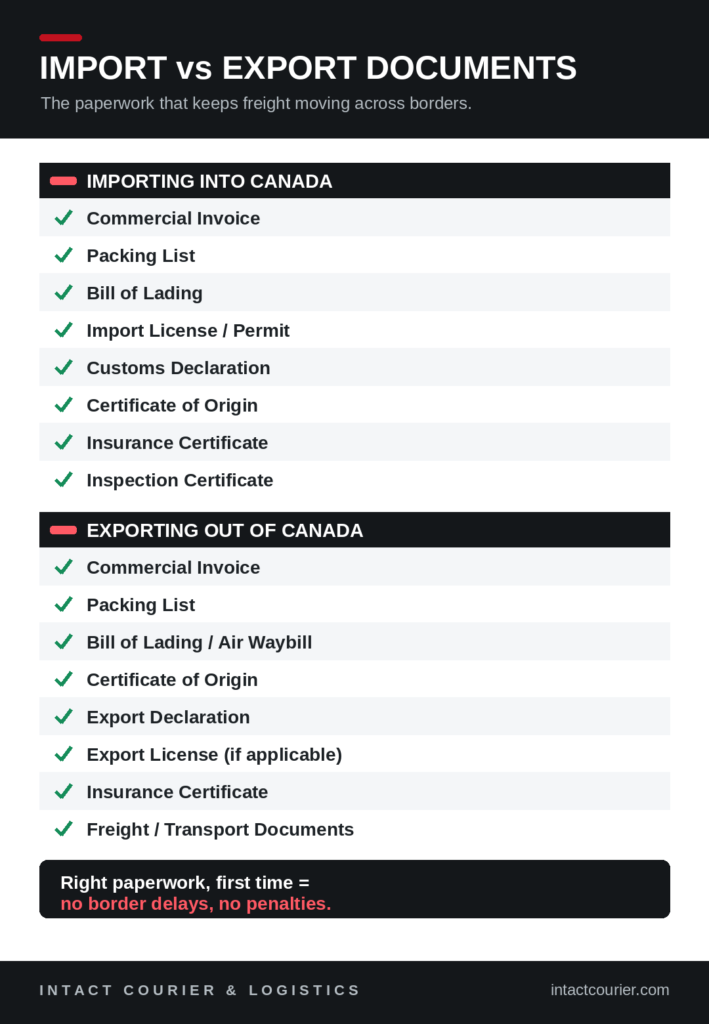
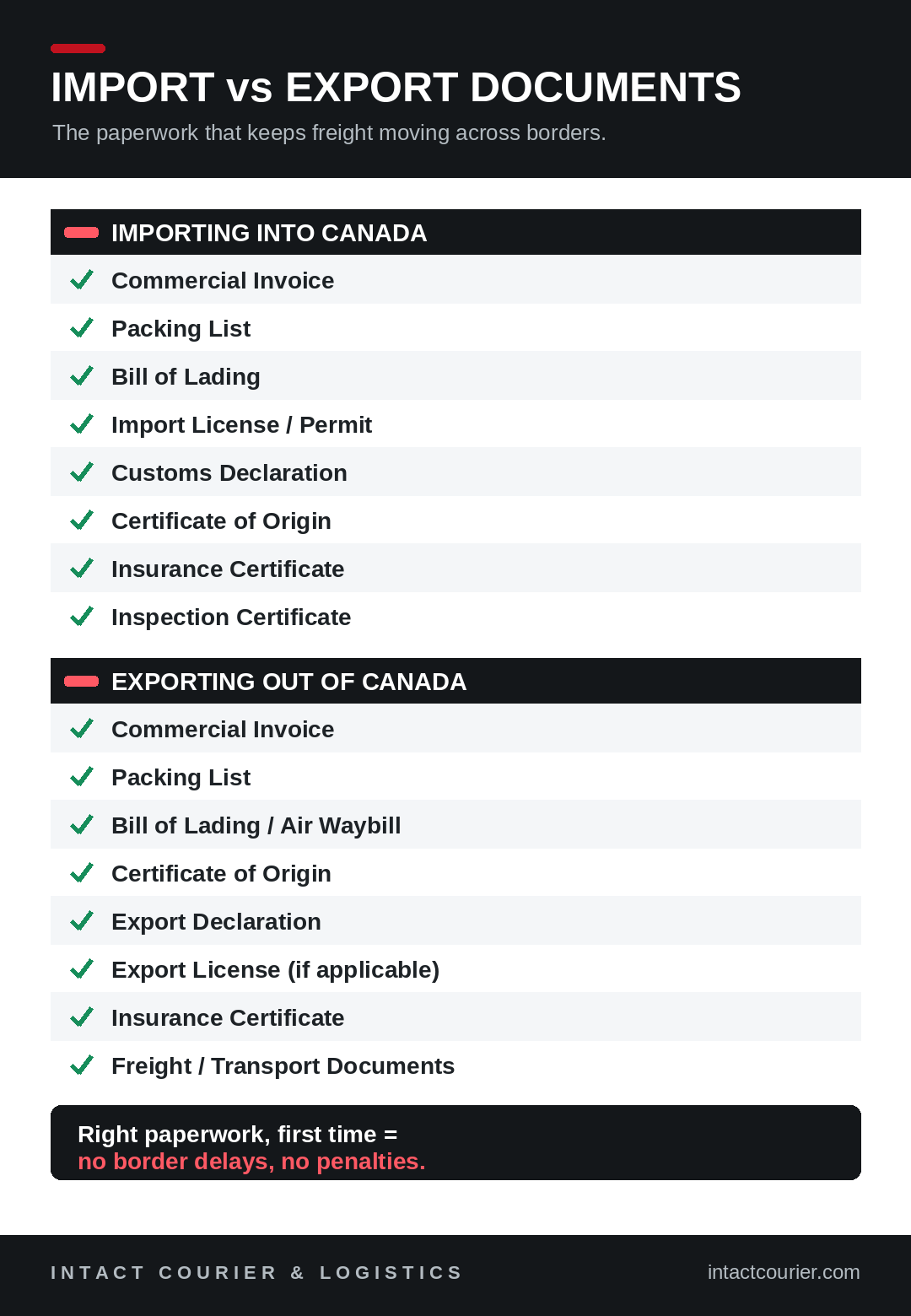
To clear goods into Canada, expect to provide a commercial invoice (details of goods, value, terms and parties), a packing list, a bill of lading (the contract and receipt from the carrier), an import licence or permit for restricted goods, and a customs declaration. Depending on the product you may also need a certificate of origin, an insurance certificate, and an inspection certificate.
Documents you need to export from Canada
Exporting mirrors the list with a few additions: commercial invoice, packing list, bill of lading or air waybill, certificate of origin, an export declaration, an export licence where the goods are controlled, an insurance certificate, and the supporting freight documents.
Why the paperwork matters more than shippers think
Every one of these documents exists to answer a question customs will ask: what is it, what’s it worth, where’s it from, and is it allowed. Get one wrong and the shipment is held — which means storage fees, missed delivery windows, and sometimes penalties. Getting the paperwork right the first time is the cheapest, fastest way to keep freight moving.
Document by document: what each one actually does
The commercial invoice establishes what the goods are and what they’re worth — customs duty is assessed from it. The bill of lading is the contract of carriage and receipt. The certificate of origin (under CUSMA for North American trade) determines whether preferential duty rates apply. Packing lists let officers verify contents without opening every carton. And permits or licences apply to controlled goods — food, plants, pharmaceuticals, dangerous goods. Missing any one of these is the difference between a border crossing measured in minutes and one measured in days.
The errors that actually cause customs holds
Brokers see the same five mistakes on repeat: vague descriptions (“parts,” “samples”), values that don’t match the sales invoice, missing origin claims, wrong HS classification codes, and shipper/consignee details that don’t match across documents. Every one is preventable with a checklist and a second set of eyes. The cost of getting it wrong isn’t just the delay — repeated errors flag your company for more frequent inspection.
PARS, PAPS and pre-clearing your freight
Commercial road freight into Canada pre-clears under PARS; into the US, under PAPS. Your carrier applies the barcode, your broker files entry before the truck reaches the border, and the driver crosses with a decision already made. When shipments still stall, it’s almost always because paperwork reached the broker late — which is why an experienced cross-border carrier confirms documents at pickup, not at the port.
Frequently asked questions
What documents do I need to import into Canada?
A commercial invoice, packing list, bill of lading, any required import licence or permit, and a customs declaration — plus a certificate of origin, insurance and inspection certificate depending on the goods.
What documents do I need to export from Canada?
A commercial invoice, packing list, bill of lading or air waybill, certificate of origin, export declaration, any required export licence, insurance and freight documents.
What happens if my shipping documents are wrong?
The shipment is typically held at the border, which leads to storage fees, delivery delays and possible penalties until the paperwork is corrected.
What documents do I need to ship from Canada to the US?
At minimum: a commercial invoice, bill of lading, and — to claim duty-free treatment — a CUSMA certification of origin. Certain goods add permits or FDA/USDA requirements. Your carrier and customs broker should confirm the full set before pickup.
What is the difference between PARS and PAPS?
Both are pre-arrival clearance systems for truck freight: PARS covers shipments entering Canada, PAPS covers shipments entering the United States. In each, the broker files entry against a barcode before the truck arrives, so the border decision is ready when the driver pulls up.
Intact Courier & Logistics runs same-day, freight, medical and 3PL delivery across Calgary, Vancouver, Edmonton, Winnipeg, Toronto and Montreal. Get a quote or see our fulfillment services.